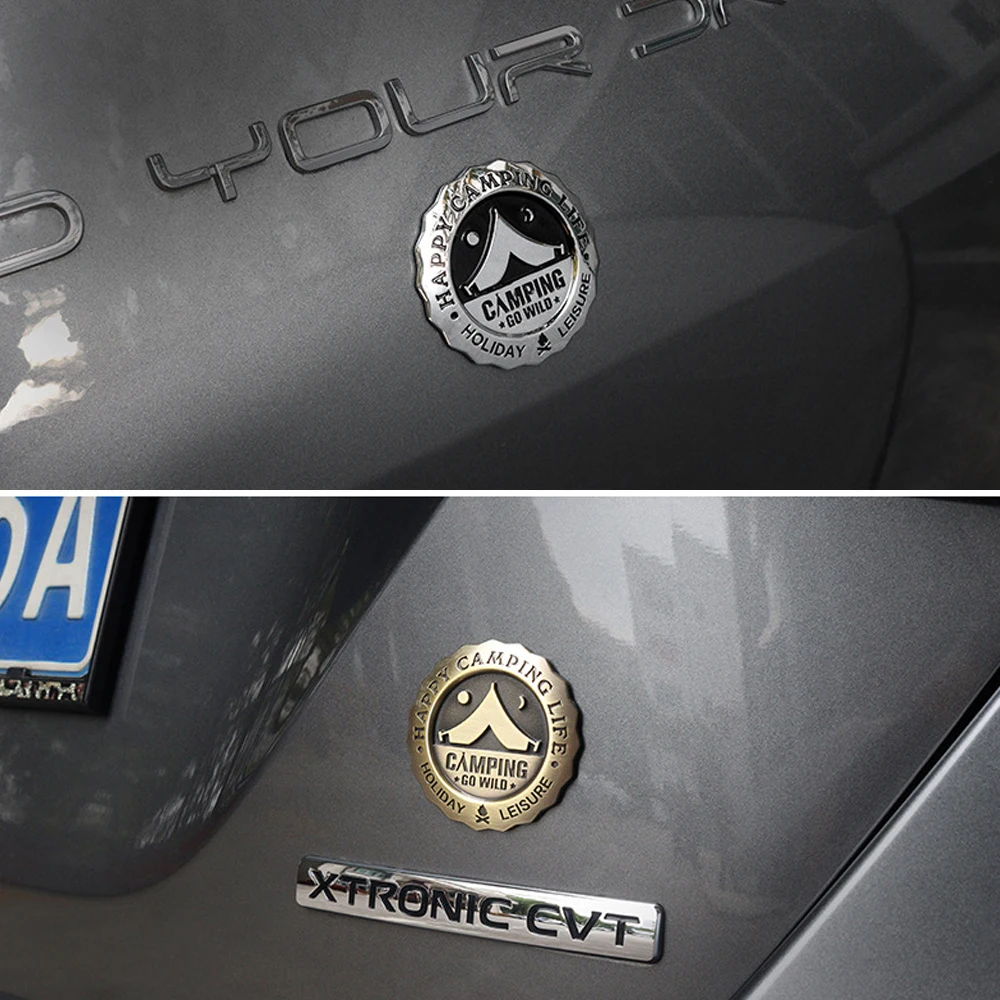
This case shows how Himgo supported a California-based automotive aftermarket brand in upgrading black matte zinc alloy car emblems for outdoor UV durability.
The project focused on coating fade control, matte texture stability, coating adhesion, and batch appearance consistency for tailgate badges used in high-UV outdoor conditions.
Project Overview
| Industry | Automotive aftermarket |
| Location | California, USA |
| Customer Type | Automotive aftermarket brand |
| Business Scope | Custom vehicle branding kits |
| Application | Tailgate badge |
| Project Nature | Product upgrade for outdoor durability |
| Product | Zinc alloy metal emblem |
| Size | 90 mm × 30 mm |
| Thickness | 2.5 mm |
| Relief Height | 1.2 mm |
| Surface Finish | Matte black coating |
| Total Lead Time | ~6 weeks |
Application Scenario
The emblem was installed on vehicle tailgates as part of custom branding kits. For automotive metal emblem applications in California, UV exposure is a key finish risk.
- High UV exposure under California climate conditions
- Outdoor long-term vehicle use
- Temperature range from -10°C to 60°C
- Regular washing with water and cleaning agents
- Visible tailgate position with direct appearance inspection
Original Problem
The customer wanted to upgrade an existing product line after receiving warranty complaints related to black coating appearance.
- Black coating faded after 4–6 months of outdoor use
- Uneven discoloration appeared across the emblem surface
- Matte texture became visually inconsistent
- Reduced visual quality affected the aftermarket branding kit
Customer Requirements
- UV resistance target for minimum 2 years of outdoor use
- No visible fading after accelerated UV validation
- Stable matte black finish
- Consistent appearance across batches
- Coating adhesion suitable for vehicle exterior use
Root Cause Analysis
The engineering review showed that the previous coating system did not maintain pigment stability under continuous sunlight. Surface preparation and curing control also affected coating adhesion and final matte texture.
- UV degradation reduced black pigment stability
- Coating thickness variation affected matte appearance
- Insufficient surface preparation reduced coating adhesion
- Curing variation created batch-to-batch appearance differences
Engineering Challenges
- Improving UV resistance without changing the matte black appearance
- Maintaining consistent matte texture after exposure
- Controlling color difference before and after UV testing
- Improving coating adhesion on zinc alloy substrate
- Keeping batch appearance stable during mass production
Material and Process Decision
Zinc Alloy Base Material
Zinc alloy was kept as the base material because the emblem required physical relief, stable shape, and a solid badge feel. The 1.2 mm relief height provided visible depth without increasing the total thickness beyond 2.5 mm.
Surface Preparation Before Coating
Before coating, the emblem surface was prepared to improve coating adhesion. This step reduced the risk of peeling, uneven coating hold, and weak bonding between the zinc alloy surface and matte black coating.
UV-Resistant Paint System
The coating system was changed to a UV-resistant matte black paint. The purpose was to reduce pigment degradation and maintain a stable black tone after UV exposure.
Controlled Curing Process
The curing process was controlled to reduce batch variation. For matte coatings, curing conditions affect both surface texture and adhesion performance.
Protective Top Layer
A protective top layer was added to improve finish stability during washing and outdoor exposure. This was managed as part of the full finishes and surface treatments plan.
Key Manufacturing Parameters
| Material | Zinc alloy |
| Manufacturing Process | Die casting |
| Dimensions | 90 mm × 30 mm |
| Thickness | 2.5 mm |
| Relief Height | 1.2 mm |
| Coating Thickness | 20–25 μm |
| UV Resistance Test | 300+ hours |
| Adhesion Grade | 4B–5B |
| Dimensional Tolerance | ±0.15 mm |
| Mass Production Time | 20 days |
Testing and Validation
Before mass production, the upgraded matte black coating was validated through UV aging, color comparison, adhesion testing, and visual inspection.
- UV aging test for 300+ hours
- Color comparison before and after exposure
- Coating adhesion test
- Matte texture visual inspection
- Batch appearance comparison against approved sample
Quality Control Focus
The project was controlled under Himgo’s quality management process, with added attention to coating appearance and adhesion stability.
- Surface preparation review before coating
- Coating thickness control at 20–25 μm
- Curing cycle verification
- Adhesion grade check
- Visual inspection for uneven discoloration
- Batch comparison against approved matte black sample
Project Results
- No significant fading after UV testing
- Stable matte finish maintained after accelerated exposure
- Coating adhesion reached 4B–5B test range
- Customer approved the finish for full product upgrade
- Warranty complaints related to fading were reduced after the upgrade
When to Use This Solution
- Use when black matte car emblems are exposed to strong sunlight
- Use when fading or uneven discoloration has appeared in previous batches
- Use when matte texture must remain stable after outdoor exposure
- Use when zinc alloy emblems require coating adhesion control
- Use when tailgate badges must maintain consistent branding appearance
FAQs
Why do black matte car emblems fade outdoors?
Fading can occur when the coating pigment, curing process, or protective layer is not stable under continuous UV exposure.
Is 300+ hours of UV testing equal to 2 years of outdoor use?
No. UV testing is used for coating comparison and validation. It does not directly equal real outdoor service life.
Why is surface preparation important before matte black coating?
Surface preparation improves coating adhesion and reduces the risk of peeling, weak bonding, or uneven surface appearance.
Can matte texture change after UV exposure?
Yes. Matte texture can change if the coating system or curing process is not controlled before outdoor use.
What should be checked before mass production?
UV aging, color comparison, coating adhesion, coating thickness, and batch appearance should be checked before production.
Need to Improve UV Resistance for Black Matte Car Emblems?
Send your emblem size, material, coating requirement, quantity, and outdoor application environment for engineering review.
Request Samples Request a Project Proposal