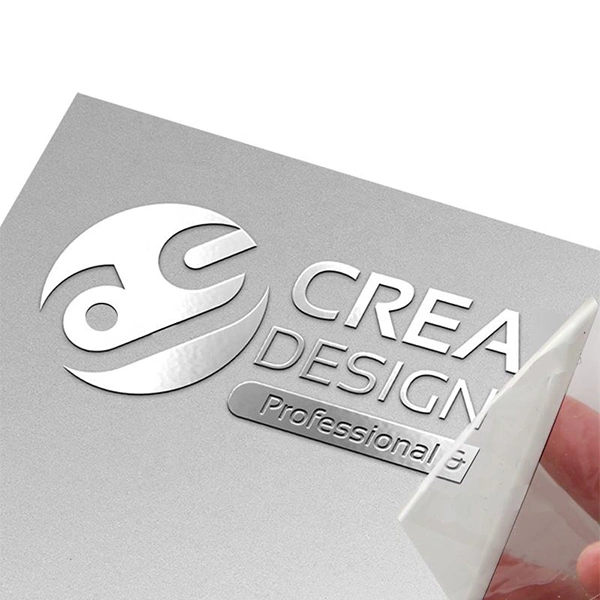
Metal branding components are widely used in consumer electronics to support brand identity, product differentiation, and premium appearance.
Typical applications include:
- device branding logos
- decorative metal badges
- certification and identification labels
- trim branding elements
Unlike industrial applications, consumer electronics require high precision, ultra-thin structures, and consistent visual quality across mass production.
Even small variations in surface finish or detail can affect overall product perception.
Himgo supports electronics branding projects by focusing on fine-detail manufacturing, stable finishing processes, and production consistency.
Electronics Industry Challenges
Producing metal branding components for electronic devices involves several unique challenges related to precision, appearance, and integration.
1.Fine Detail Limitations
Many standard manufacturing processes cannot achieve very fine details.
Typical issues include:
- blurred edges
- loss of small text or thin lines
- inconsistent micro features
Especially critical for compact electronic devices
2.Surface Finish Consistency
Electronics products require highly controlled surface finishes such as:
- brushed metal
- mirror finish
- matte textures
- anodized surfaces
Common challenges
- color variation between batches
- inconsistent brushing direction
- uneven plating
Especially critical for automotive branding consistency
3.Thickness & Product Integration
Electronic components often require ultra-thin structures.
Typical constraints:
- too thick → affects assembly
- too thin → deformation risk
Requires controlled thickness and dimensional precision
4.Adhesion on Smooth Surfaces
Electronic devices often use:
- plastic housings
- glass panels
- coated surfaces
Challenges include:
- weak adhesion
- peeling over time
Requires appropriate adhesive systems and surface compatibility
Visual Quality Standards
Metal branding components for electronics must meet strict visual quality requirements.
Quality Requirements Overview
| Quality Factor | Requirement |
|---|---|
| Edge finish | smooth, no burr |
| Surface | no scratches or defects |
| Color | consistent across batches |
| Detail | sharp and well-defined |
These standards are essential for maintaining brand consistency in consumer products
Recommended Solutions for Electronics Applications
Electroformed Metal Logos
Used for:
- smartphone branding
- headphone logos
- compact electronic devices
Process capability
| Parameter | Value |
|---|---|
| Thickness | 0.05–0.30 mm |
| Minimum detail | 0.05 mm |
| Tolerance | ±0.02 mm |
Suitable for ultra-thin, high-detail metal logos
View Metal LogosThin Metal Labels
Typical applications:
- certification labels
- branding plates
- device identification
Typical specifications
- lightweight structure
- consistent finish
- suitable for flat or slightly curved surfaces
Suitable for long-term identification
View Metal LabelsDecorative Metal Nameplates
Typical applications:
- premium electronics
- branded product panels
- decorative identification
Process Capability Overview
Electroforming Capability
| Parameter | Value |
|---|---|
| Thickness | 0.05–0.30 mm |
| Detail size | 0.05 mm |
| Tolerance | ±0.02 mm |
Etching Capability
| Parameter | Value |
|---|---|
| Thickness | 0.1–1 mm |
| Detail size | 0.1 mm |
Design Integration Guide
Selecting the right manufacturing method depends on product design requirements.
| Design Requirement | Recommended Solution |
|---|---|
| Ultra-thin structure | Electroforming |
| Fine details | Electroforming |
| Higher durability | Etching |
| Premium appearance | Nickel / brushed finishes |
Material & Surface Finish
Common Materials
- nickel
- aluminum
- stainless steel
Surface Finishes
- brushed
- mirror
- matte
- anodized
Consistent surface finish is critical for maintaining product quality across batches
FAQ
How small can metal logo details be?
Electroforming processes can achieve detail sizes as small as 0.05 mm.
What is the thinnest metal logo available?
Metal logos can be produced as thin as 0.05 mm, depending on structure and application.
How is color consistency controlled in production?
Consistency is maintained through controlled plating processes and batch management.
What adhesive is used for electronics applications?
Industrial adhesive systems are selected based on surface type, including plastic, glass, or coated materials.
What is the typical production lead time?
Sample: 5–7 days
Mass production: 12–30 days
Discuss Your Electronics Branding Project
If you are developing branding components for electronic devices, our team can review your design requirements and recommend suitable manufacturing solutions.