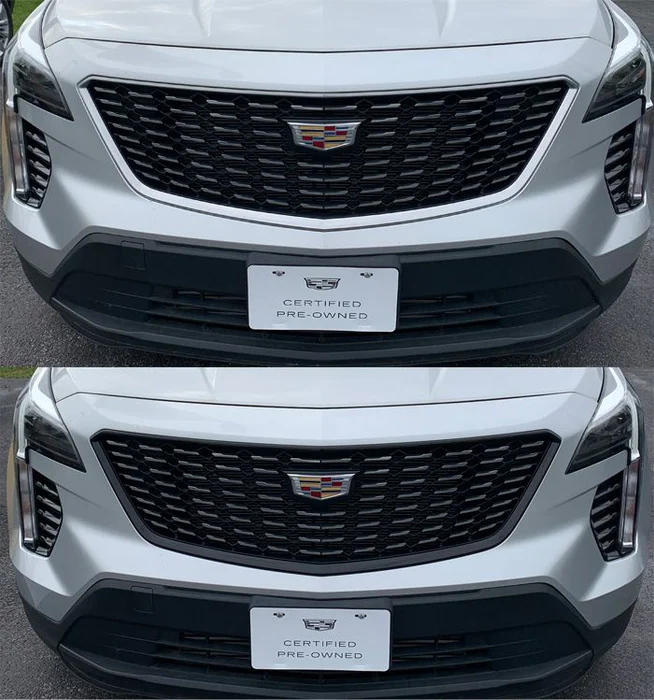
This case shows how Himgo supported a Poland-based automotive branding supplier in controlling chrome plating color variation on zinc alloy 3D metal emblems used for front grille applications.
The project focused on chrome brightness consistency, matte black infill repeatability, plating thickness control, and batch-level visual stability. The final production result achieved color consistency within ΔE < 1.5.
Project Overview
| Industry | Automotive branding |
| Location | Poland |
| Customer Type | Automotive branding supplier |
| Business Scope | Performance car styling components |
| Application | Front grille emblem |
| Project Nature | Supplier replacement due to quality issues |
| Product | Zinc alloy 3D metal emblem |
| Size | 95 mm × 40 mm |
| Thickness | 3.0 mm |
| Relief Height | 1.5 mm |
| Surface Finish | Chrome plating + matte black infill |
| Total Lead Time | ~6 weeks |
Application Scenario
The emblem was installed on the front grille of performance vehicles. For automotive metal emblem applications, the front grille position makes surface appearance highly visible under daylight.
- Outdoor exposure
- UV exposure during vehicle use
- Dust and airflow impact at the front grille position
- Temperature variation from -25°C to 60°C
- Direct daylight inspection by end users
Original Supplier Issues
The customer replaced the previous supplier because the production batches did not match the approved sample. The problem affected brand appearance rather than basic part function.
- Visible color difference between batches
- Chrome brightness inconsistency
- Black infill tone variation
- Customer complaints related to brand mismatch
Customer Requirements
- Stable chrome appearance across batches
- Color tolerance within ΔE < 2.0
- Uniform matte black paint finish
- Consistent reflection under daylight
- Repeatable production process for future orders
Root Cause Analysis
The engineering review showed that the appearance variation came from multiple process points. Chrome brightness was affected by plating thickness and surface preparation, while black infill tone was affected by paint viscosity and curing conditions.
- Electroplating thickness variation changed surface reflectivity
- Die casting surface defects affected plating appearance
- Paint viscosity changes affected matte black tone
- Uncontrolled curing conditions created batch differences
- Visual inspection without standard lighting missed small color shifts
Engineering Challenges
- Controlling electroplating thickness variation
- Maintaining surface reflectivity consistency
- Improving paint filling repeatability
- Building stable batch process control
- Reducing rejection caused by visual mismatch
Material and Process Decision
Zinc Alloy Material
Zinc alloy was selected because the emblem required a physical 3D structure and stable relief detail. It also supports electroplating for decorative automotive emblem applications.
Controlled Die Casting Surface Quality
Before plating, die casting surface quality was reviewed to reduce surface marks that could affect chrome reflection. The goal was to improve the plating base before applying the nickel and chrome layers.
Nickel Base Plating: 10–15 μm
A controlled nickel base layer was applied before chrome plating. This helped improve surface stability and reduced the risk of uneven chrome brightness.
Chrome Layer: 0.3–0.8 μm
The chrome top layer was controlled within 0.3–0.8 μm. This range supported consistent reflection under daylight without creating visible batch variation.
Matte Black Infill Process
The matte black infill process was controlled through paint viscosity and curing cycle. This reduced tone variation inside recessed areas of the emblem.
Finish Control Plan
Chrome plating and matte black infill were managed as part of the full finishes and surface treatments control plan, rather than as separate appearance steps.
Key Manufacturing Parameters
| Material | Zinc alloy |
| Manufacturing Process | Die casting |
| Dimensions | 95 mm × 40 mm |
| Thickness | 3.0 mm |
| Relief Height | 1.5 mm |
| Nickel Thickness | 10–15 μm |
| Chrome Thickness | 0.3–0.8 μm |
| Color Tolerance Requirement | ΔE < 2.0 |
| Final Color Control | ΔE < 1.5 |
| Dimensional Tolerance | ±0.15 mm |
| Mass Production Time | 22 days |
Testing and Validation
Before mass production, Himgo validated both surface appearance and coating stability. The inspection focused on whether the approved sample could be repeated during batch production.
- Color measurement using ΔE testing
- Salt spray testing for corrosion resistance
- Visual inspection under standard lighting
- Adhesion test for plating and paint layers
- Batch comparison against the approved sample
Quality Control Focus
The project was controlled under Himgo’s quality management process, with added focus on appearance repeatability and batch comparison.
- Die casting surface inspection before plating
- Nickel and chrome layer thickness control
- Paint viscosity control before infill
- Curing cycle verification
- ΔE measurement against approved sample
- Final daylight appearance review
Project Results
- Color consistency achieved within ΔE < 1.5
- Chrome brightness variation reduced between batches
- Matte black infill appearance became more uniform
- Batch rejection rate reduced significantly
- Customer complaints related to brand mismatch were eliminated
- Production was fully transferred to Himgo
When to Use This Solution
- Use when chrome-plated car emblems show visible batch color variation
- Use when front grille badges must maintain daylight appearance consistency
- Use when matte black infill tone varies between production runs
- Use when supplier replacement is needed due to repeated appearance complaints
- Use when ΔE-based batch comparison is required before shipment
FAQs
Why do chrome-plated car emblems show color differences between batches?
Color differences can come from plating thickness variation, surface preparation differences, chrome reflectivity changes, or inconsistent paint infill conditions.
Why is nickel plating used before chrome plating?
Nickel plating provides a stable base layer for chrome plating and helps improve surface appearance consistency across production batches.
What does ΔE mean for emblem color control?
ΔE measures the visible color difference between a production part and the approved sample. Lower ΔE means closer color consistency.
Why does matte black infill vary between batches?
Matte black infill can vary when paint viscosity, filling depth, curing time, or inspection conditions are not controlled.
Is visual inspection enough for chrome emblem production?
No. Visual inspection should be supported by standard lighting and color measurement when batch appearance consistency is required.
Need to Control Chrome Plating Color Consistency?
Send your emblem size, material, finish, color tolerance, quantity, and application environment for engineering review.
Request Samples Request a Project Proposal