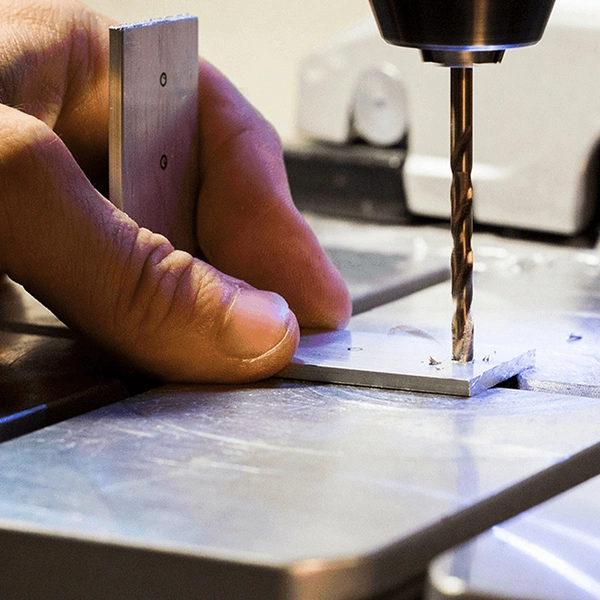
Metal identification products such as metal nameplates, metal labels, metal emblems, and metal cards can be manufactured using several specialized production processes.
Each manufacturing method offers different advantages depending on the product structure, material type, durability requirements, and visual appearance.
Understanding how these processes work — and when they are typically used — helps manufacturers and product engineers select the most suitable production method for their application.
This page introduces the manufacturing processes commonly used in the production of precision metal identification components used in metal nameplates, metal labels, and metal emblems.
Overview of Manufacturing Processes
Metal identification products are widely used in equipment manufacturing, consumer electronics, automotive branding, and industrial labeling.
Because these products must remain readable and visually consistent over long service life, the manufacturing method plays an important role in determining product performance.
Key factors influencing process selection include:
- required marking precision
- product thickness
- material type
- surface finishing requirements
- expected production volume
Different manufacturing processes are selected depending on the functional and visual requirements of each project.
You can explore our full manufacturing capabilities to understand how different production methods are applied in real manufacturing projects.
Core Manufacturing Processes
| Process | Typical Application | Typical Precision | Notes from Production Experience |
|---|---|---|---|
| Chemical Etching | Metal nameplates, industrial labels | line width ~0.2–0.3 mm | Often used when small text must remain readable after long-term outdoor exposure |
| Die Casting | Automotive emblems, metal badges | wall thickness ~1–2 mm | Suitable for producing raised logos and three-dimensional brand elements |
| Metal Stamping | Equipment tags and flat metal plates | ±0.1–0.2 mm depending on tooling | Efficient for repeated batch production |
| Laser Engraving | Serial numbers, QR codes, ID plates | marking depth varies by material | Frequently used for variable information marking |
| CNC Engraving | Thick industrial plates | deep engraving possible | Suitable for plates requiring durable markings |
| Electroforming | Premium metal logos | extremely fine detail | Used when thin metal structures and fine detail are required |
Each process is selected based on the structural and visual requirements of the final product.
Chemical Etching
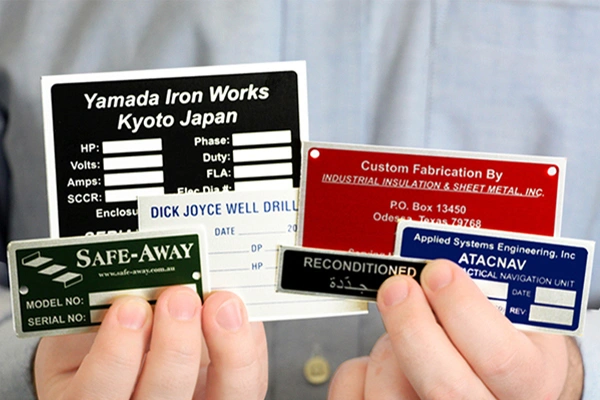
Chemical etching is widely used for producing metal nameplates and industrial identification labels.
This process removes metal in controlled patterns using chemical reactions, allowing detailed markings to be created directly in the metal surface.
Typical characteristics:
- fine detail reproduction
- suitable for thin metal plates
- permanent markings resistant to wear
- consistent reproduction across batches
In many equipment identification projects, chemical etching is selected when nameplates contain detailed technical information that must remain readable for many years.
In many equipment identification projects, chemical etching is selected when metal nameplates contain detailed technical information that must remain readable for many years.
Die Casting
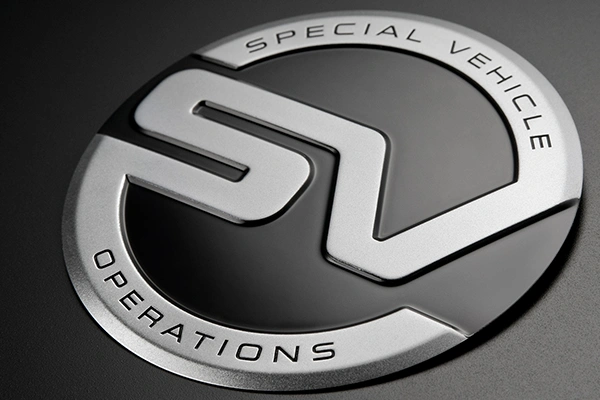
Die casting is commonly used to manufacture three-dimensional metal emblems, particularly in automotive and brand applications.
Molten metal — often zinc alloy — is injected into precision molds to form raised structures and detailed shapes.
Typical characteristics:
- strong three-dimensional structures
- suitable for decorative brand logos
- compatible with electroplating finishes
- durable metal construction
This process is frequently used for automotive badges and metal brand emblems that require depth and visual impact.
This process is frequently used for automotive metal emblems and decorative brand logos that require raised structures and plated finishes.
Metal Stamping
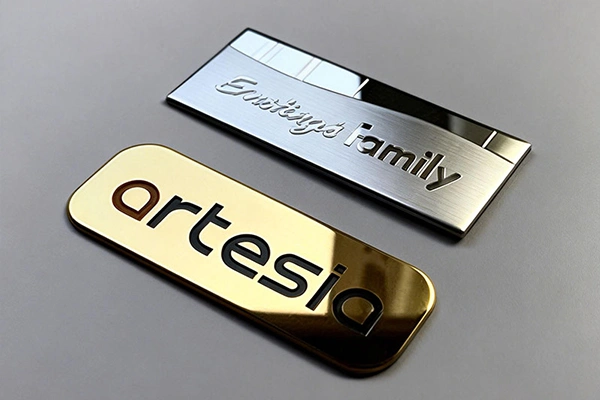
Metal stamping is used to produce flat metal tags and identification plates from metal sheets.
This process uses hardened dies to cut or shape metal sheets into specific forms.
Typical characteristics:
- efficient for medium and large batch production
- consistent part dimensions
- cost-effective for repeated manufacturing
- suitable for equipment tags and identification plates
Stamping is often selected for flat identification components used in industrial equipment.
Laser Engraving
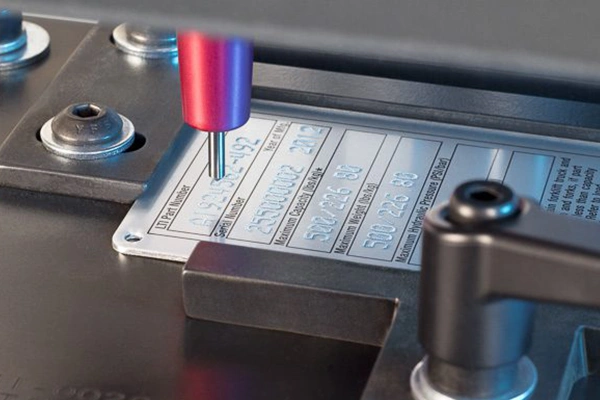
Laser engraving uses a focused laser beam to permanently mark metal surfaces.
This process is commonly used when products require variable information such as serial numbers, barcodes, or QR codes.
Typical characteristics:
- permanent marking
- flexible customization
- high readability for identification codes
- suitable for smaller production runs
Stamping is often selected for flat identification components used in industrial equipment.
CNC Engraving
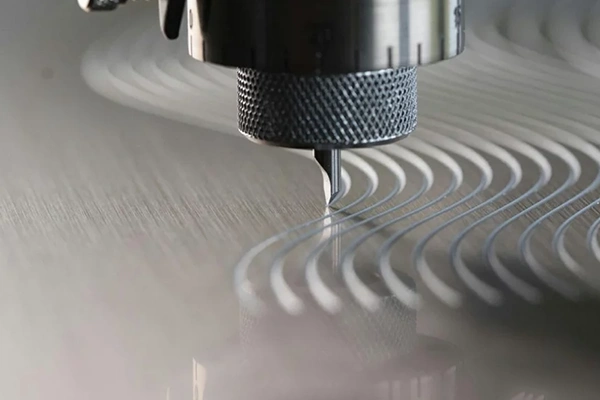
CNC engraving is used when deeper engraving or machining is required.
Computer-controlled cutting tools engrave markings directly into the metal surface.
Typical characteristics:
- precise depth control
- suitable for thicker metal plates
- highly durable markings
- often used for heavy-duty industrial identification plates
CNC engraving is often selected when markings must remain visible even after long-term wear.
CNC engraving is often used for industrial metal nameplates where deep markings are required for long-term durability.
Electroforming
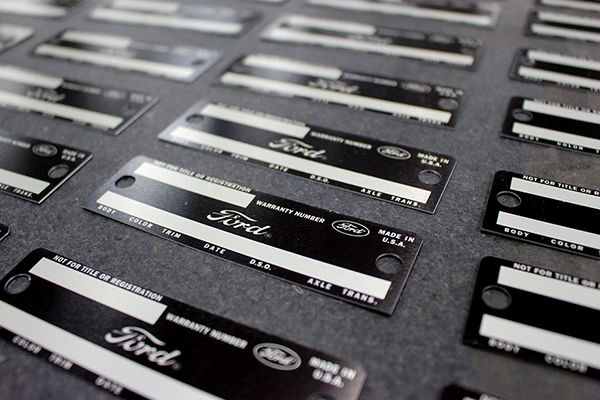
Electroforming is used to create extremely fine metal logos and decorative elements.
Metal is deposited onto a mold surface through electrochemical reactions, creating thin metal structures with excellent detail reproduction.
Typical characteristics:
- ultra-fine detail reproduction
- smooth metal surfaces
- thin metal structures
- commonly used for premium decorative brand logos
Electroforming is often selected for high-end branding elements where visual detail is important.
How Manufacturing Processes Are Selected in Real Projects
In practical manufacturing projects, the process is typically chosen based on the functional requirements of the product.
| Project Requirement | Common Process Choice |
|---|---|
| Fine text and complex graphics | Chemical Etching |
| Three-dimensional logos | Die Casting |
| Flat equipment identification tags | Metal Stamping |
| Variable information marking | Laser Engraving |
| Deep engraved industrial plates | CNC Engraving |
| Decorative brand logos | Electroforming |
Selecting the appropriate process helps ensure both durability and visual quality.
Selecting the correct manufacturing process is only one part of a successful project.
You can learn more about our manufacturing capabilities and production capacity for metal identification products.
Manufacturing Limitations and Considerations
Each manufacturing process also has limitations that must be considered during product design.
Examples include:
- very thin plates may deform during deep engraving processes
- die casting is typically used for thicker structures rather than thin plates
- laser marking contrast may vary depending on metal material
- some surface finishes require specific base materials
Considering these factors early in the design stage helps avoid redesign during production.
Integration with Surface Finishing
After the primary manufacturing process, additional finishing steps are often applied.
| Manufacturing Process | Compatible Surface Finishes |
|---|---|
| Chemical Etching | Anodizing, painting |
| Die Casting | Electroplating, PVD coating |
| Metal Stamping | Brushed finish, anodizing |
| Laser Engraving | Oxidation contrast marking |
| Electroforming | Nickel plating |
Surface finishing enhances corrosion resistance, durability, and visual appearance.
Example Production Scenarios
Industrial Equipment Nameplates
Chemical etching is frequently used when nameplates contain detailed technical specifications that must remain readable over long service life.
Chemical etching is widely used for custom metal nameplates used in industrial equipment.
Automotive Metal Emblems
Die casting is commonly used for automotive badges where raised logos and plated finishes are required.
Die casting is commonly used to produce custom metal logos used for automotive and brand applications.
Metal Identification Cards
Laser engraving is often used to add serial numbers or personalized information on metal cards.
Laser engraving is often used for metal identification labels where unique codes or serial numbers must be added.
FAQs
What manufacturing process is commonly used for metal nameplates?
Chemical etching and stamping are commonly used depending on the required thickness and detail.
Which process is used for automotive metal emblems?
Automotive emblems are typically produced through die casting followed by electroplating.
Can different manufacturing processes be combined?
Yes. For example, a die-cast emblem may also receive electroplating or laser marking.
Quality control procedures are integrated into each production stage.
Learn more about our quality management system used in metal identification manufacturing.
How is the manufacturing process selected?
The process is determined during engineering review based on product design, material selection, and expected production volume.
Discuss Your Manufacturing Requirements
We’ll review your application and requirements.
Then confirm a practical, manufacturable solution for production.