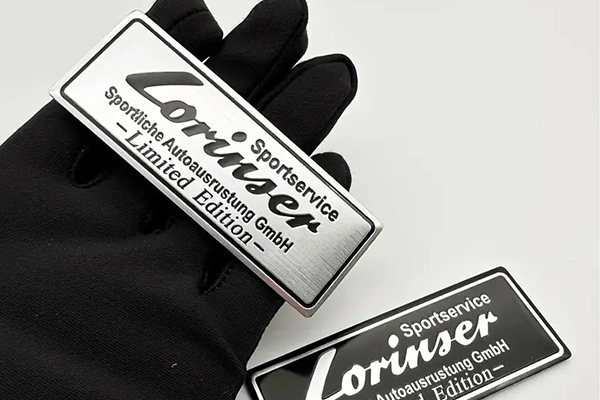
Metal identification components are widely used in equipment manufacturing, product branding, industrial labeling, and financial card production. These products require durable materials, stable surface finishes, and consistent manufacturing quality.
Himgo focuses on the manufacturing of custom metal identification products including metal nameplates, metal labels, metal emblems, and metal cards. Our production capabilities support projects that require reliable batch manufacturing and long-term supply stability.
This page provides an overview of the manufacturing methods, materials, and production capabilities used in our facility.
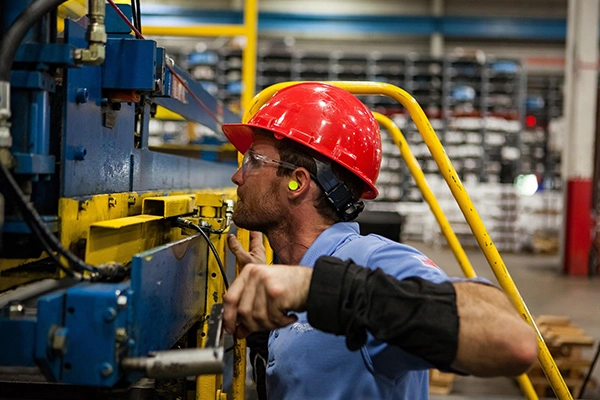
Manufacturing Overview
Metal identification products often need to remain readable and visually consistent throughout the lifecycle of the equipment or product they are attached to.
Typical requirements include:
- corrosion resistance
- durable surface finishing
- precise engraving or marking
- repeatable production across batches
Manufacturing capabilities at Himgo are structured to support these requirements through controlled production processes, material verification, and standardized production workflows.
Core Manufacturing Processes
Different metal identification products require different manufacturing methods depending on the product structure and visual requirements.
| Manufacturing Process | Typical Products | Key Advantage |
|---|---|---|
| Chemical Etching | Metal nameplates, industrial labels | High precision markings and fine details |
| Die Casting | Automotive emblems, metal badges | Strong three-dimensional structures |
| Metal Stamping | Metal tags and plates | Efficient production for medium to large volumes |
| Laser Engraving | Metal labels and cards | Permanent markings and flexible customization |
| CNC Engraving | Thick metal plates | Precise deep engraving capability |
| Electroforming | Premium metal logos | Ultra-fine detail and smooth surface finish |
Each manufacturing process is selected based on product design, durability requirements, and surface finishing expectations.
Materials Used in Production
Metal identification products can be manufactured using different metal materials depending on the application environment and design requirements.
| Material | Typical Application | Key Characteristics |
|---|---|---|
| Aluminum | Equipment nameplates | Lightweight and corrosion resistant |
| Stainless Steel | Industrial labels | High durability and chemical resistance |
| Brass | Decorative nameplates | Premium appearance and warm metallic tone |
| Copper | Branding plates | Distinctive color and texture |
| Zinc Alloy | 3D metal emblems | Suitable for die-casting complex shapes |
| Nickel | Electroformed logos | Excellent precision and smooth surface finish |
Material selection is typically determined based on environmental exposure, durability requirements, and desired visual appearance.
Surface Finishing Capabilities
Surface finishing plays an important role in both durability and visual appearance of metal identification products.
| Surface Finish | Visual Effect | Typical Use |
|---|---|---|
| Anodizing | Matte metallic finish | Aluminum nameplates |
| Electroplating | Chrome, gold, or black finish | Automotive emblems |
| PVD Coating | High durability decorative finish | Premium metal logos |
| Brushed Finish | Linear metallic texture | Decorative nameplates |
| Polished Finish | Mirror-like appearance | Luxury branding plates |
| Sandblasting | Uniform matte surface | Industrial identification plates |
Surface finishing is selected based on environmental durability requirements and brand appearance expectations.
Production Capabilities Overview
Production capabilities depend on product type, material selection, and manufacturing process.
| Capability | Typical Range |
|---|---|
| Minimum thickness | approx. 0.2 – 0.3 mm depending on material |
| Maximum thickness | up to 5 mm |
| Minimum line width | approx. 0.2 – 0.3 mm depending on process |
| Maximum part size | varies depending on production method |
| Batch production | suitable for small batch to OEM-scale production |
| Customization options | logos, serial numbers, QR codes, barcodes |
Exact specifications are determined during engineering review based on project requirements.
Typical Manufacturing Workflow
The production of custom metal identification products generally follows a structured workflow.
Step 1 — Requirement Review
Customer drawings, logo files, and material requirements are reviewed to evaluate manufacturing feasibility.
Step 2 — Process Selection
The most appropriate manufacturing method is selected based on product structure and finishing requirements.
Step 3 — Tooling or Production Setup
Tooling preparation or process setup is performed depending on the production method.
Step 4 — Sample Production
Samples may be produced for verification of dimensions, markings, and surface finish.
Step 5 — Mass Production
Production is carried out under defined process parameters and controlled workflows.
Step 6 — Quality Inspection
Products are inspected for dimensional accuracy, marking quality, and surface finishing before shipment.
Manufacturing Equipment
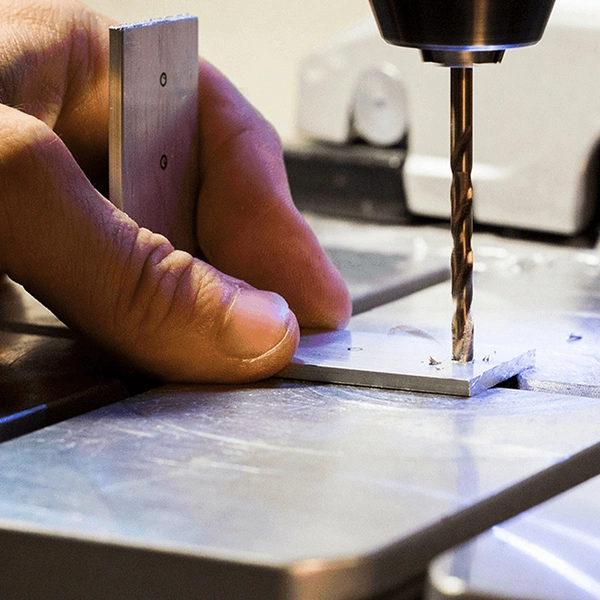
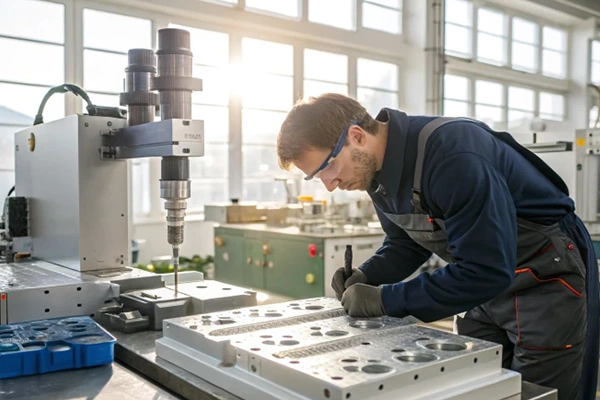
Manufacturing of metal identification products requires specialized equipment across multiple production stages.
Typical equipment used in production includes:
- chemical etching production lines
- die casting machines for metal emblems
- CNC engraving machines
- laser marking systems
- electroplating production lines
- surface finishing equipment
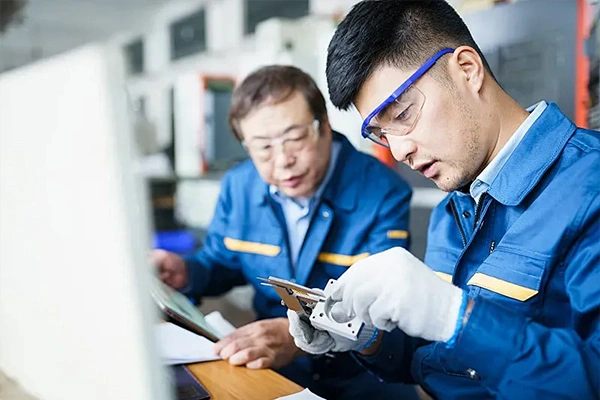
- dimensional inspection instruments
These production systems support consistent manufacturing across different product types and materials.
Quality Integration in Manufacturing
Quality control is integrated throughout the manufacturing process.
Typical quality checkpoints include:
- incoming material verification
- dimensional inspection during production
- surface finish verification
- visual inspection before packaging
- final product inspection prior to shipment
Quality management procedures help ensure that products delivered to customers remain consistent across different production batches.
Learn more about our quality system on the Quality Management System page.
FAQs
What manufacturing processes are commonly used for metal identification products?
Common manufacturing processes include chemical etching, die casting, stamping, engraving, and electroforming. The selection of process depends on product structure, durability requirements, and visual finish.
What materials can be used for custom metal identification products?
Typical materials include aluminum, stainless steel, brass, copper, zinc alloy, and nickel. Each material offers different characteristics in terms of durability, corrosion resistance, and appearance.
Can manufacturing processes be selected based on project requirements?
Yes. The manufacturing method is usually determined after reviewing product drawings, material requirements, and the intended application environment.
Can Himgo support OEM manufacturing projects?
Many projects involve customized metal identification components for OEM products. Manufacturing processes and materials can be adjusted based on project specifications and production volume.
Discuss Your Manufacturing Requirements
We’ll review your application and requirements.
Then confirm a practical, manufacturable solution for production.